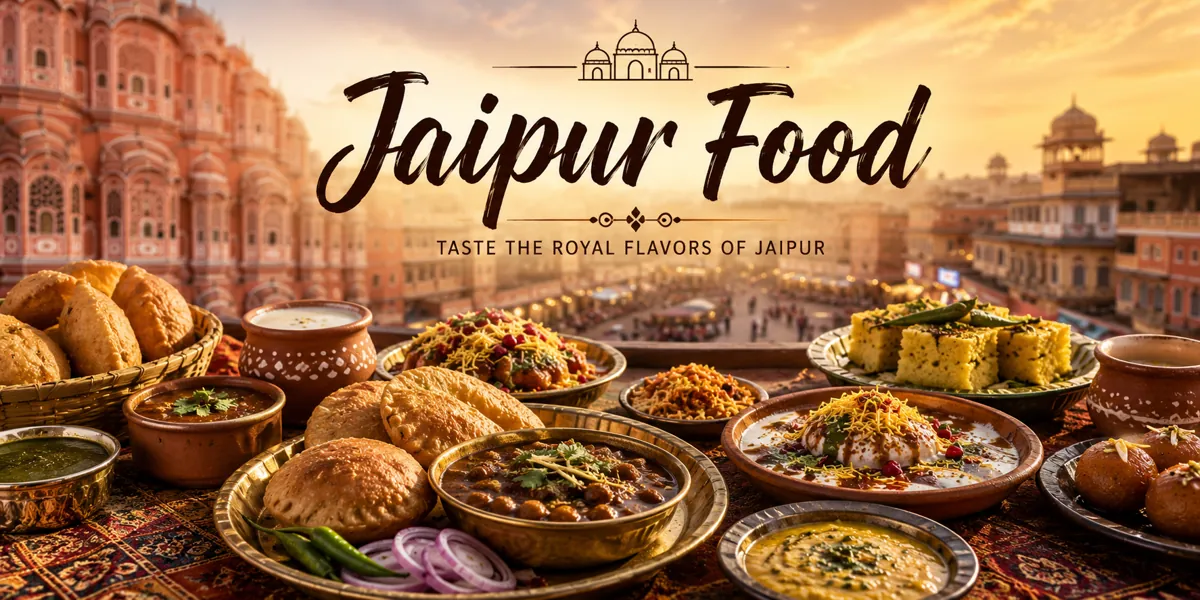
Jaipur Famous Food: 12 Dishes and Where the City Actually Eats Them
Eight in the morning on Station Road. The bhaiya at the counter is tearing squares of newspaper faster than I can follow, and the queue behind me does not slow down for anybody, least of all a tourist deciding things. Kachori into the paper. Ladle of aloo sabzi on top, no one asks if you want it. You eat standing, with your fingers, in about ninety seconds, and then you move because someone else needs the spot. That is Jaipur famous food in its truest form and no restaurant in this city has ever managed to reproduce it.
Most food guides get Jaipur wrong in the same way. They hand you twelve dishes like a menu, you eat all twelve badly across two days, and you fly home with acidity and no actual memory of any of it.
Jaipur food isn't one cuisine. It's four or five stacked on top of each other. Festival sweets that only make sense in one particular month. Breakfast snacks engineered for people who have to be at a shop by nine. Slow ghee-heavy celebration food that came down from Marwar. Meat dishes out of Rajput hunting kitchens, which were never everyday food for anyone. Half of what gets sold to you as "Jaipur's own" actually belongs to Jodhpur.
So: twelve dishes done properly, where people here genuinely eat them, and then the stuff nobody writes about. What a safe stall looks like. How to eat vegan without unknowingly putting away half a kilo of ghee. What a day of this should cost.
Why Jaipur Food Tastes the Way It Does
Rajasthan is dry. That one fact built the whole cuisine.
When you can't count on fresh vegetables and water is expensive, you cook with what keeps. Gram flour. Lentils. Millet. Dried berries off desert shrubs. Milk boiled down past the point where it can spoil. And ghee, which preserves as much as it enriches, whatever your cardiologist thinks. Gatte ki sabzi exists because somebody needed a sabzi on a day there were no vegetables in the house. Ker sangri exists because a thorny bush and a khejri tree between them produced something you could dry and keep for months. Even the quantities of ghee made sense once, in a place where a body doing physical work needed calories that would still be there at four in the afternoon.
The other half came from the palace. Jaipur was a royal capital, and royal kitchens cooked for hunting parties and feast days. That's where the slow meat comes from. Laal maas was never Tuesday dinner.
Knowing this changes how you order. The richness isn't a chef's flourish, it's load-bearing. Ask for dal baati churma with less ghee and you'll be served something, sure, but it won't be dal baati churma.
Jaipur Famous Food at a Glance
| Dish | What It Is | When to Eat It | Veg |
|---|---|---|---|
| Pyaaz kachori | Fried pastry, spiced onion filling | Breakfast, before 11 am | Yes |
| Dal baati churma | Panchmel dal, baked wheat baati, sweet churma | Lunch, then a nap | Yes |
| Laal maas | Mutton in dried red chilli | Dinner, as the main event | No |
| Ker sangri | Dried desert berry and bean, tangy and dry | Inside a thali | Yes |
| Gatte ki sabzi | Gram-flour dumplings in yoghurt gravy | Lunch or dinner | Yes |
| Mirchi bada | Whole chilli, potato filling, besan batter | Late afternoon with tea | Yes |
| Ghewar | Honeycombed disc soaked in syrup | Teej and Gangaur season | Yes |
| Mawa kachori | Sweet pastry, milk solids, sugar syrup | Shared, never solo | Yes |
| Rabri | Milk reduced until thick | Small portion, with something else | Yes |
| Bajra roti and lehsun chutney | Millet bread, fierce garlic chutney | Winter lunch | Yes |
| Kachori-sabzi breakfast | Dal or hing kachori with potato curry | 7 to 10 am | Yes |
| Kulhad lassi | Thick sweet yoghurt, clay cup, malai on top | Midday, in place of lunch | Yes |
Two warnings before the detail. "Pure veg" tells you what goes into the dish, not what the kitchen is free of, so it says nothing at all about nuts or gluten cross-contact. And nearly every sweet here has dairy in it, including a few that don't look like they should.
What to Eat in Which Month
Nobody publishes this and I don't understand why, because it's the most useful thing to know before booking. A good chunk of the famous food of Jaipur is seasonal. Show up in the wrong month and you're eating a tired version of something that was extraordinary eight weeks earlier.
| Months | At its best | Leave it alone |
|---|---|---|
| October to March | Bajra roti and lehsun chutney, laal maas, dal baati churma, ker sangri, and weather cool enough to walk between counters for three hours | Nothing. This is the season. |
| March and April | Ghewar comes back for Gangaur. Lassi season starts. | Heavy meat in the middle of the day |
| April to June | Kulhad lassi, kulfi, anything cold | Long street-food walks, rich thalis at lunch, uncovered dairy |
| July to September | Ghewar at full peak for Teej and Raksha Bandhan. Mirchi bada and chai in the rain. | Anything sitting out on a humid afternoon |
Festival dates shift each year with the Hindu calendar, so treat the ghewar window as roughly right rather than exact. Kachori, gatte, ker sangri, rabri and mawa kachori are made all year and don't really have a season.
October to March is the honest answer for a food trip. July and August are the exception worth sweating for, because ghewar season turns every halwai in the city into a different business for six weeks.
The 12 Dishes Worth Your Appetite
1. Pyaaz Kachori
Pastry, deep fried until the surface blisters, stuffed with onion cooked down with saunf, coriander seed and chilli. Break it. It should shatter. If it bends instead of shattering, it's been sitting and you've been handed the batch nobody else wanted.
Go before eleven. That's the whole trick — before eleven the turnover is fast and the kadhai oil is fresh, after two it's a lottery. Rawat Misthan Bhandar on Station Road, opposite Polo Victory Cinema at Sindhi Camp, is the name every single person will give you. Fifty-odd years old, opens around seven. The queue has become its own tourist attraction, which I'd argue is now half the reason people stand in it. Counters near Chaura Rasta in the old city make a version that's every bit as good, with nobody photographing it.
One is enough. I'm serious. They look small, people order three, and then discover a pyaaz kachori is roughly a lunch.
2. Dal Baati Churma
The dish that defines Rajasthani cooking, and the one most often served badly to visitors, usually by places that know tourists won't complain.
Three parts. Panchmel dal — five lentils, not one, which is why a good one tastes like it has layers and a lazy one tastes flat. Baati — wheat dough rolled into balls and baked hard, traditionally over dung cakes, now usually tandoor or oven. Churma — baati crushed up with ghee and jaggery until it turns into a coarse sweet rubble.
You break the baati, pour dal into the hollow, add ghee, and eat churma alongside so the sweet cuts the salt. Nobody explains this. I watch visitors treat churma as dessert and save it for the end, which throws away the entire point of the dish.
First time, get it at a thali place rather than a stall — everything lands together and someone can walk you through it. Two questions when you order. Is the baati baked or fried? Are refills included? Fried baati is quicker for the kitchen and considerably heavier for you.
3. Laal Maas
Mutton, cooked slowly in a paste of dried red chilli. Properly it's Mathania chilli from near Jodhpur, which gives colour and a low smoky heat instead of the flat burn you get from generic powder. Yoghurt, garlic, ghee do the rest.
In a photograph the good version and the terrible version look identical. A careless kitchen gets the red from powder and colouring, and the heat arrives with nothing behind it. A serious kitchen soaks and grinds whole chillies, and you know within one mouthful.
Niros on MI Road has been going close to fifty years and its laal maas is the one people mean when they say the words. Recent listings put it near ₹900. Recent reviews are split roughly down the middle between people who still call it the best in the city and people who think the price has outrun the plate — I'd say that's a fair fight and you can decide which side you're on. Handi is the name locals give you when they want the same dish for less money. Heritage hotels do a more formal, more expensive interpretation.
Never order this somewhere with slow meat turnover. Not once.
4. Ker Sangri
Dried ker berries and sangri beans off desert plants, soaked back to life and cooked with chilli, amchur and a lot of ghee. Tangy, chewy, salty, faintly austere. It's the most genuinely regional thing on this list and, predictably, the thing visitors most often push to the edge of the plate.
Try it in a thali first. A spoonful, not a bowl. Ask if the kitchen makes it in-house, because the preserved ingredients carry their own salt and a careless version is genuinely punishing.
Then eat it with hot bajra roti in December and it clicks.
5. Gatte ki Sabzi
Besan kneaded with spices, rolled into logs, boiled, sliced into discs, dropped into yoghurt gravy. The discs are the gatte. Tender and holding their shape is right. Rubbery is wrong, and there's a lot of rubbery about.
Safest vegetarian order in the city. It's on almost every menu, and the yoghurt keeps the spice in check so it survives most tolerances. Besan is naturally gluten free — the kitchen isn't, so ask if that matters.
6. Mirchi Bada
A whole large chilli, slit, stuffed with spiced potato, dipped in besan batter, fried, handed over in paper. The chilli they use is usually milder than its size suggests. Usually.
Jodhpur claims it and Jodhpur is probably right, but Jaipur makes it constantly and makes it well. Eat within minutes of frying. One that's been in the tray since noon is a sad soft thing and no amount of chutney rescues it.
7. Ghewar
Batter poured in a thin stream into hot ghee inside a metal ring, where it sets into a rigid honeycomb disc, then drowned in syrup. Sometimes plain. Sometimes buried under malai or mawa and pistachio.
Festival food. It peaks around Teej and Raksha Bandhan in the monsoon, when every shop in the city stacks it in towers by the door, and comes back for Gangaur in spring. You can buy it in November. It just won't be the same thing.
A fresh ghewar keeps some structure under all that syrup. Collapsed into uniform mush means old. Milk-topped versions need real refrigeration, so buy those where there's a working cold counter and not a tray on a table in August. Laxmi Misthan Bhandar in Johari Bazaar is the famous name and it's good, though I'd gently point out that fame and freshness are different things, and dozens of neighbourhood halwais are selling ghewar made this morning while LMB is selling volume.
Taking some home? Ask how long it holds, ask whether the topping needs a fridge, and pack it nowhere near your clothes.
8. Mawa Kachori
Looks exactly like the savoury kachori you had at breakfast. Filled with reduced milk solids and nuts, then drenched in syrup. Rich to the point of being a bit of a struggle. Two people, one kachori.
Jodhpur again, honestly. Rawat does a well-known version. Ask when the batch was made, because dairy filling plus a warm room is not a combination you want to gamble on.
9. Rabri
Milk simmered for hours, the skin folded back in each time it forms, cardamom or saffron somewhere in there. Eaten alone, or spooned over ghewar, jalebi, malpua.
It's pure dairy. It lives or dies on cold storage. Busy shop, refrigerated counter, eat it soon. Any tray sitting warm and uncovered, walk away, however good it looks and however much the man insists.
10. Bajra Roti with Lehsun Chutney
Bajra is pearl millet. No wheat in it. Patted thick and rough, cooked till it turns slightly nutty, served hot with ghee and sometimes gur, almost always with a garlic chutney that will take the roof off your mouth if you're careless with the first bite.
Winter food — the calendar above isn't decoration on this one. It dries out fast so it has to reach you warm, and it's best in a rural-style restaurant or inside a proper thali. Thodi si chutney to start. Really, a little.
11. The Kachori-Sabzi Breakfast
If you only take one recommendation from this whole guide, take this one. It barely shows up in food listicles and I've never worked out why.
Not pyaaz kachori. Dal kachori, or a hing-heavy one, crushed into a bowl or a leaf plate, thin aloo sabzi over the top, spoon of chutney, sometimes dahi. It costs almost nothing. It's what a very large part of this city eats before work, standing up, every single morning of the year.
Go where the customers are local and the queue keeps moving. A long line usually means fresh batches — usually — but glance at the serving area and how plates are being washed before you commit. Order one, taste it, then decide about the second.
12. Kulhad Lassi
Thick, sweet, set yoghurt in an unglazed clay cup, lid of malai on top, dusting of pista. Cold, heavy, much closer to a meal than a drink.
Now the practical bit, because this catches out more visitors than anything else in Jaipur. The original Lassiwala is Shop No. 312 on MI Road near Panch Batti, and the board says Kishanlal Govind Narayan Agarwal. Trading since 1944. It sells lassi. Only lassi — no snacks, no sweets, no menu — and that is the fastest way to know you're in the right place, because there are several shops in a row beside it running near-identical names and near-identical signboards.
Opens around seven. Regularly finished by two or three in the afternoon. Turn up at five expecting the original and you will be buying from a copy while being told otherwise.
Lactose intolerant? Skip it. There's no light version and asking for one will only confuse everybody.
Where to Eat in Jaipur, Area by Area
The Old City: Johari Bazaar, Chaura Rasta, Badi Chaupar
Breakfast, sweets, snacks. You walk and graze here rather than sit, and it slots naturally alongside Hawa Mahal and the City Palace in one morning.
LMB in Johari Bazaar is the landmark everyone photographs. The counters around Chaura Rasta are where the eating actually happens — kachori, chai, mithai, fast turnover, no seating worth mentioning. Quality shifts block by block and sometimes shop by shop, and the honest advice is to eat three things well instead of ten things nervously. Our Jaipur walking tour covers this ground with someone who knows which counter changed hands last year, which matters more here than any review from 2023.
MI Road and Station Road
The central corridors. Rawat at the Station Road end for kachori, Lassiwala and Niros further along MI Road, and enough auto access that you're not walking a kilometre in the heat to get between them.
Right choice if you're staying in Bani Park or near the station. Check live opening hours — branches and copycat names genuinely do cause confusion on this stretch, as covered above.
Masala Chowk
Open-air food court in Ram Niwas Garden. Couple of dozen vendors, actual seating, small entry fee at the gate. The stall lineup changes so treat any specific number you read online as approximate. Rajasthan Tourism lists it among the city's official food destinations.
Perfect answer for a group where one person wants chaat, one wants South Indian, one wants dal baati and nobody wants an argument about it. Evening is when it comes alive. I'll be straight with you though: it's a food court, not a revelation, and each stall stands or falls on its own queue and its own cleanliness. The venue doesn't vouch for anybody.
C-Scheme and Newer Jaipur
Cafés, modern Rajasthani restaurants, air conditioning, card machines, and staff who can hold an actual conversation about what's in the dish. That last one matters enormously with allergies or children.
Less atmospheric. Not less valid.
Judging a Street Food Stall in Thirty Seconds
Five things. That's it.
- Turnover. Food that moves is food that's fresh. A queue of regulars beats any rating online.
- Cooked to order, and hot. Fried in front of you always beats lifted off a tray at room temperature.
- Covers. Prepared food, chutneys, garnish — under a lid or a net, not open to the road.
- Water and washing. Watch how plates and glasses get cleaned. One bucket of grey water serving two hundred customers is the single biggest risk on any thela in India.
- Hands and cash. Ideally whoever handles money isn't also handling ready-to-eat food without washing between. Good stalls split this between two people.
Avoid: raw garnish rinsed in unknown water, ice from an unidentified source, dairy sitting warm. Sealed or reliably filtered drinking water throughout the trip, no exceptions. Licensed food businesses in India register with the FSSAI, and established shops usually display the licence number near the counter.
None of this makes the risk zero. If your stomach is unreliable, or you have three days and can't afford to lose one, order the same dish sitting down somewhere clean. That isn't cheating and nobody's judging you.
Vegetarian, Vegan and Jain Food in Jaipur
Vegetarians have it easy here. Most of the city eats veg most of the time, entire streets are pure veg, and nobody finds the request remotely unusual.
Vegan is harder. And the difficulty isn't where you'd expect.
Ghee, butter, milk, curd, cream, paneer — everywhere, including in dishes that look plant-based from across the room. Dal gets finished with ghee. Breads get brushed with it. That innocent-looking gravy is quite possibly built on dahi. Say "vegetarian" and you get dairy by default, because in India vegetarian has always included dairy and always will.
Say the whole list instead, slowly: no milk, no curd, no butter, no ghee, no cream, no paneer. Then ask how it's cooked, not just what's in it. A busy stall may agree in complete good faith and still be unable to stop cross-contact from one shared kadhai, which is why a sit-down restaurant is the realistic choice for strict vegans.
Jain food is easy to find and is a different thing entirely. Jain cooking drops onion, garlic and root vegetables. It does not drop dairy. Order Jain because you're vegan and you'll get a plate swimming in ghee.
Eating With Food Allergies in Jaipur
"Does this have nuts?" isn't enough, and the reason is mechanical rather than anyone being careless. Sweets get cut on shared boards. Oil gets reused across items. Spice mixes come out of one grinder. Garnish gets scattered by hand across a whole counter at once.
What turns up most: wheat, dairy, peanuts, cashew, almond, sesame, and besan, which is in far more than you'd guess. Mustard oil and mustard seed appear in regional cooking. Cashew paste thickens a great many restaurant gravies without ever making it onto the menu.
Carry an allergy card in Hindi and hand it over instead of explaining across a loud room. Pick restaurants where a manager or the cook can be brought to the table. Skip buffets and unlabelled sweet counters completely if the allergy is severe, and carry your own medication rather than assuming a chemist is round the corner.
Tell your driver and guide on day one. Before the first meal, not at the table with the food arriving.
What Food Actually Costs in Jaipur
Anywhere from twenty rupees at a chai stall to several thousand in a heritage hotel dining room. Planning bands for 2026, per person, per meal. Not quotes.
| Type of Meal | Per Person | What You Get |
|---|---|---|
| Street breakfast or snacks | ₹100 – ₹350 | Kachori, chai, lassi, a sweet |
| Casual local meal | ₹250 – ₹700 | Thali, dining room, no frills |
| Comfortable sit-down regional meal | ₹700 – ₹1,500 | Air conditioning, service, laal maas |
| Fine dining or heritage hotel | ₹1,500 upward | Formal Rajasthani menus, full service |
For scale: laal maas at a landmark MI Road restaurant was recently listed near ₹900 on its own, before bread or drinks. A full kachori-and-chai breakfast on Station Road won't trouble ₹150. That gap is the entire range of eating in this city, and both ends of it are worth doing.
A One-Day Jaipur Food Itinerary
Built around heat, digestion and shop timings instead of a checklist. Follow it and you eat five things properly rather than fifteen badly.
- 8:00 am Kachori and sabzi, standing up
Station Road, or an old-city counter, with chai. Watch how the regulars order before you try. Don't order a second one however good it was.
- 9:30 am – 1:00 pm Hawa Mahal, the old city, the bazaars
One small sweet near Johari Bazaar somewhere in there. One. Not a box to carry round in the heat all day and then abandon.
- 1:00 pm Lassi instead of lunch
Reach Lassiwala before it sells out. A heavy midday meal here is a mistake you'll feel until nine at night, and a kulhad genuinely does the job.
- 2:30 – 6:00 pm Rest. Properly.
Not filler advice. The food is heavy, the afternoon is heavier, and the people who push through both are the ones who spend day three in the hotel bathroom.
- 7:00 pm Masala Chowk or a Rajasthani thali
Masala Chowk if the group wants different things. Thali if you want dal baati churma, ker sangri and gatte in one sitting. If laal maas is on your list, tonight is about that, and drop the thali.
- 9:30 pm Chai, not dessert
You've had enough sugar. The point was five flavours you remember, not fifteen you survived.
Cameras, Cooks and Basic Manners
Ask before filming someone at close range. Most cooks say yes and a few will show off a little, which is honestly the best part of the morning.
If a vendor gives you ten minutes explaining what ghewar batter does when it hits hot ghee, buy something. That's the whole transaction, that's all it costs. And don't stand at a counter shooting video for fifteen minutes while paying customers wait behind you for their breakfast.
One more. Food that people have eaten for centuries is not a stunt or a dare or "weird". Name it properly, describe it accurately, credit whoever made it.
Frequently Asked Questions About Jaipur Famous Food
What is the most famous food in Jaipur?
Pyaaz kachori — it's the most recognisable and the one genuinely associated with Jaipur rather than borrowed from elsewhere in Rajasthan. Dal baati churma, ghewar, gatte ki sabzi, ker sangri and laal maas make up the rest of what people mean by the famous food of Jaipur.
Where can I eat the best pyaaz kachori in Jaipur?
Rawat Misthan Bhandar on Station Road, opposite Polo Victory Cinema at Sindhi Camp, opens around seven and is the name everyone gives. Old-city counters near Chaura Rasta make versions just as good with a fraction of the crowd. Judge by how fast batches are moving, not by fame.
Which is the original Lassiwala on MI Road?
Shop No. 312 near Panch Batti, board reading Kishanlal Govind Narayan Agarwal, trading since 1944. It sells lassi and nothing else, which is the quickest way to tell it from the similarly named shops beside it. Go before 1 pm — it regularly sells out by mid-afternoon.
What sweet is Jaipur famous for?
Ghewar, above all around Teej and Raksha Bandhan in the monsoon months when it's stacked outside every shop in the city, and again at Gangaur in spring. Rabri, mawa kachori and malpua after that.
Is Jaipur good for vegetarian food?
Exceptionally, yes. Pure veg restaurants, sweet shops and thali houses are everywhere. Vegans have to be much more specific, because ghee and dairy hide in dishes that look plant-based. Jain food excludes onion and garlic but not dairy, so it isn't a substitute.
Is street food in Jaipur safe to eat?
Depends on the stall and on you. High turnover, cooked to order, served hot, ingredients covered, sensible washing water. Avoid warm dairy, unknown ice and raw garnish. Short trip or sensitive stomach — order the same dish somewhere clean and sitting down.
Where do locals actually eat in Jaipur?
Everywhere. Neighbourhood sweet shops and breakfast counters, the Station Road and MI Road institutions, the old-city lanes, Masala Chowk in the evening, and increasingly the newer places around C-Scheme. There's no single hidden local street, and anyone promising you one is selling you something.
What does a day of eating cost in Jaipur?
Street breakfast and snacks ₹100 to ₹350 per person, casual local meal ₹250 to ₹700, comfortable sit-down regional meal ₹700 to ₹1,500, heritage hotel dining upward of ₹1,500. Laal maas alone at a landmark MI Road restaurant was recently listed around ₹900. Check a live menu — these are planning bands, not quotes.
Can I do a Jaipur food tour with children?
Yes, with adjustments. Small portions, skip the chilli-forward dishes, favour freshly fried over anything sitting out, carry something familiar as a fallback. Lassi and plain kachori are usually easy wins. Masala Chowk works well because everyone orders separately.
When is the best time of year for food in Jaipur?
October to March, comfortably. Cool weather makes the heavy dishes enjoyable instead of punishing, bajra roti and winter food come into season, and walking between counters is actually pleasant. July and August are the exception worth the heat, because that's ghewar season.
Eat Five Things Properly, Not Fifteen Badly
The food here makes sense the moment you can see the logic under it. Breakfast counters exist because people have to get to work. Sweets pile up in particular months because a festival is coming. Dried berries and besan dominate because this is a desert and somebody still had to put dinner on the table in June.
Order less than you want. Ask what's in it. Eat the kachori standing on the street where it was fried, at eight in the morning, out of a square of newspaper, and you'll have understood something about this city that no tasting menu is going to teach you.
Eat Jaipur With Someone Who Knows Which Counter Changed Hands
Our guides live here and eat here. Food walks routed around what is fresh that morning rather than around commission partners, with dietary needs sorted before you arrive instead of argued about at the table. Get in touch to plan your Jaipur day.