Hawa Mahal Jaipur: Timings, Ticket Price & Visitor Guide
Here is the mistake many first-time visitors make at Hawa Mahal Jaipur: they take one photograph from across the road and leave. The famous pink façade is certainly the star, but it only tells half the story. Walk around to the entrance and the building turns into a series of ramps, small chambers, shaded windows and high views over the old city.
It is not a conventional palace filled with grand bedrooms and furnished halls. Hawa Mahal was built for watching the street while remaining hidden from it. Once you understand that, its thin shape and hundreds of screened openings stop looking decorative and start making practical sense.
For a 2026 visit, use 9:00 am as the normal opening time and plan around a 4:30–5:00 pm closing or last-entry window. After Rajasthan’s monument fee revision on 1 January 2026, the reported adult Hawa Mahal ticket price is ₹100 for Indian visitors and ₹600 for foreign visitors. Arrive earlier than you think you need to; the road, ticket gate and upper passages can all slow you down.
Hawa Mahal timings and ticket price at a glance
| Detail | Current planning information |
|---|---|
| Opening time | 9:00 am |
| Closing / last-entry guidance | Plan around 4:30–5:00 pm and enter earlier |
| Days open | Generally daily, subject to special closure |
| Indian adult ticket | ₹100 after the January 2026 revision |
| Foreign adult ticket | ₹600 after the January 2026 revision |
| Time needed inside | 45–75 minutes |
| Best exterior light | Early morning |
| Public entrance | Rear courtyard side, not through the street façade |
| Nearest metro station | Badi Chaupar |
| Best season | October to March |
Opening hours are not displayed consistently across every official and ticket listing. If your day depends on a precise final-entry time, check the live government ticket portal or ask the monument counter directly.
What are the Hawa Mahal timings in 2026?
Hawa Mahal normally opens at 9:00 am. For closing, use 4:30–5:00 pm as a practical planning window and aim to enter by 3:30 pm. Even when a listing shows a later closing time, ticket sales or access to the upper levels can finish first.
The monument is generally open seven days a week. Conservation work, government events and emergency restrictions can still affect entry. Jaipur’s old-city road system also changes during major processions, so a monument may be open while the route to it is unusually slow.
Photographers often arrive well before 9:00 am because the façade faces east. That is excellent for an exterior view, but it does not mean the interior gate is open. Think of the morning photograph and the ticketed visit as two connected stops with different timings.
Hawa Mahal ticket price and entry fee in 2026
Rajasthan revised prices at state-managed monuments from 1 January 2026. The reported adult Hawa Mahal entry fee is now:
- Indian adult: ₹100
- Foreign adult: ₹600
Student tickets have separate Indian and foreign categories and require current proof. Bring an original student identity card if you intend to claim a concession. Child admission, special free-entry dates and documentation rules should be confirmed on the Rajasthan monument e-ticketing portal or at the authorised counter.
The individual ticket covers the public interior of Hawa Mahal. It does not include City Palace, Jantar Mantar, a guide, transport or one of the private rooftop cafés across the road.
Should you buy the Jaipur composite ticket?
A composite pass is useful when your plan includes several participating state-managed monuments. Amer Palace, Hawa Mahal, Jantar Mantar, Nahargarh Fort, Albert Hall and selected gardens have appeared in Jaipur pass combinations. City Palace has separate management and should not be assumed to be included.
Check the current monument list, validity and visitor category before buying. Then compare the pass price with the places you will realistically enter. There is no saving in purchasing a broad ticket and exhausting yourself trying to use every admission.
Where is the Hawa Mahal entrance?
The ornate façade on Hawa Mahal Road is not the public entrance. The ticketed visitor gate is around the back, on the courtyard side. Follow the side lane and current signs rather than searching for a door among the windows facing the main road.
This small detail saves a surprising amount of confusion. Some visitors stand opposite the façade, assume there is nothing to enter and continue toward City Palace. If you want to see Hawa Mahal inside, allow time to cross the busy road safely and walk around the building.
Never step into moving traffic for a centred photograph. The road carries buses, autos, motorcycles and delivery vehicles, often at the same time. Use a safe public viewpoint or a legitimate rooftop business with a clear entrance and proper parapet.
What is Hawa Mahal like inside?
The interior surprises people because it is simpler than the front. Do not expect a chain of richly furnished royal rooms. You move through open courtyards, sloping ramps, narrow passages and compact chambers. The upper floors become lighter, thinner and breezier.
The small screened openings are called jharokhas. They filtered sun, framed the street below and allowed royal women to observe processions without being visible to the crowd. Air moving through the openings also helped make the interior more comfortable, which is why Hawa Mahal became known as the Palace of Winds.
From the upper levels, you can look across Jaipur’s walled city toward City Palace, Jantar Mantar and the surrounding bazaars. The view explains the building better than a diagram. Hawa Mahal was not an isolated monument; it was tied to the royal complex and positioned above an important ceremonial street.
There are ramps as well as steps. Ramps do not mean the whole monument is wheelchair accessible: turns can be tight, surfaces uneven and passages crowded. Move slowly, follow one-way signs where posted and keep phones and cameras inside the barriers.
Who built Hawa Mahal, and why?
Maharaja Sawai Pratap Singh commissioned Hawa Mahal in 1799. The design is attributed to Lal Chand Ustad. It extended the women’s section of Jaipur’s City Palace toward the main street, giving royal women a screened view of festivals, processions and daily market life.
The building made privacy and observation work together. Court customs limited the public visibility of royal women, yet public ceremony remained a central part of life in Jaipur. The jharokhas solved that contradiction: people inside could see the street while those below could not easily see them.
The Government of India’s India Cine Hub describes Hawa Mahal as a five-storey structure built along the old city’s main street for this purpose. Rajasthan Tourism also links the name to the steady air movement created by its numerous windows.
Why does Hawa Mahal look like a crown?
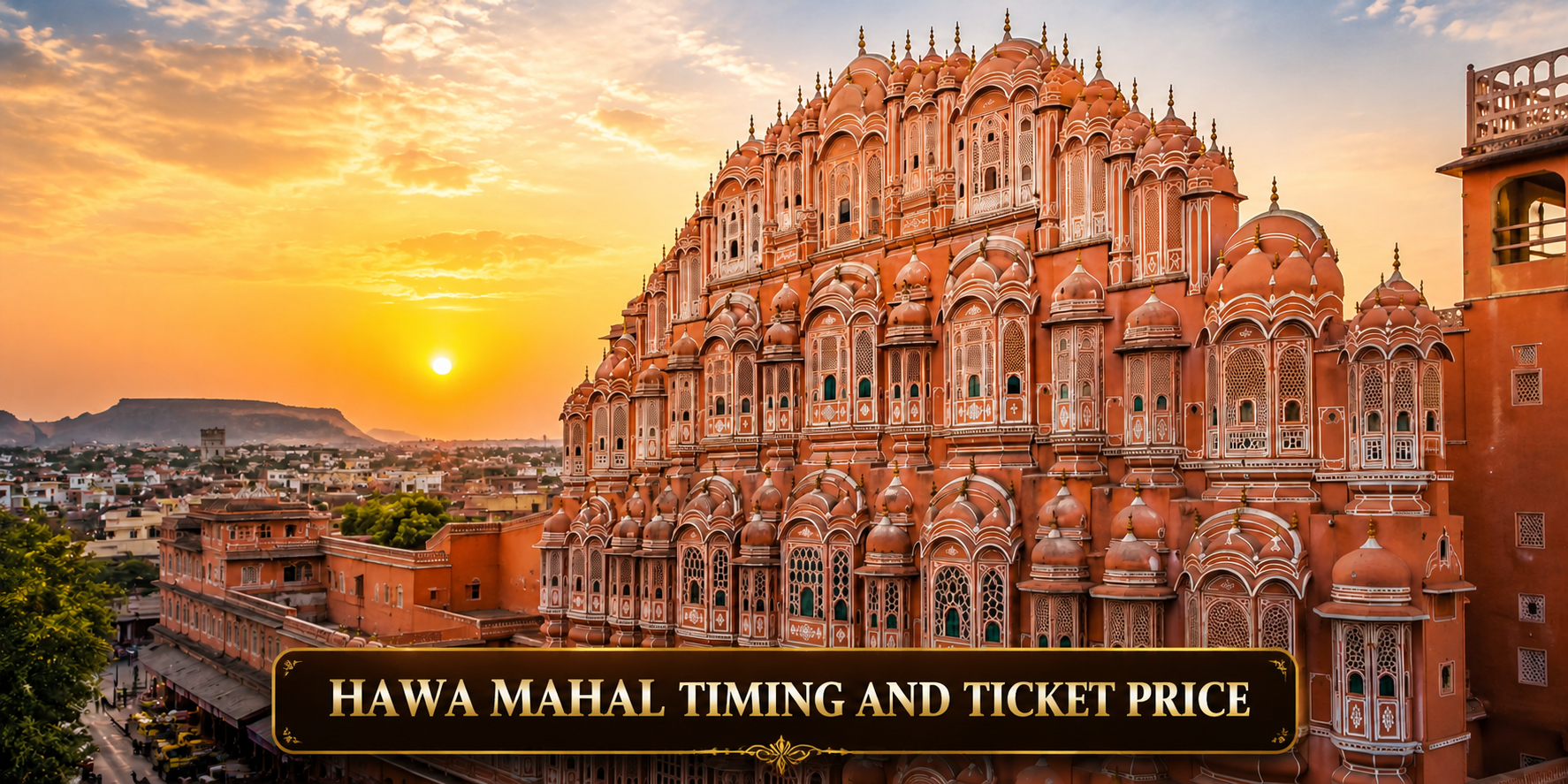
The tapering façade is widely associated with the crown of Lord Krishna, reflecting Sawai Pratap Singh’s devotion. Its five levels rise in a pyramidal form, with the upper sections appearing increasingly delicate.
Pink and red sandstone, arched openings, domed canopies, carved screens and projecting windows create the familiar street elevation. Rajput forms sit beside Mughal-influenced arches and decorative details. The result is theatrical from the road but surprisingly restrained from the courtyard.
Does Hawa Mahal really have 953 windows?
The figure 953 jharokhas is repeated widely in tourism descriptions. Whether a visitor tries to count them or not, the number is less interesting than what the openings do. They control light, air, privacy and the direction of the view all at once.
The famous face is also much shallower than many photographs suggest. Hawa Mahal functioned more like a stack of screened viewing galleries connected to the palace than a deep residential building filled with large rooms.
A short Hawa Mahal history without the lecture
Sawai Jai Singh II founded Jaipur in 1727 as a planned royal capital. Its broad streets and organised markets became settings for trade, worship and court processions. Seventy-two years later, during Sawai Pratap Singh’s reign, Hawa Mahal was added along one of those busy streets.
The structure connected the City Palace zenana, or women’s quarters, with a screened view of public life. That is why its location matters. Put the same façade in a quiet garden and much of its purpose disappears.
Over time, the street face became one of Jaipur’s most recognisable images. Conservation work keeps the monument open under heavy daily use, though individual rooms or routes may close when repairs are needed.
Best time to visit Hawa Mahal
October to March offers the most comfortable weather for exploring Jaipur’s old city. Mornings in December and January can be cool; afternoons are usually pleasant. These months are also busy, so a 9:00 am entry remains worthwhile.
For the classic façade photograph, arrive early. The building faces east and catches warmer morning light. You can take the exterior shot before opening, have breakfast nearby and return to the entrance when ticketing begins.
April to June brings intense heat. The visit itself is not long, but the surrounding walk, road crossing and market can become tiring. During the monsoon, carry rain protection and take care on damp ramps and floors.
Late afternoon can be pleasant inside, but it is a risky choice if you arrive close to last entry. Morning gives you cleaner light, fewer people and enough time to recover if old-city traffic delays you.
How long does Hawa Mahal take to visit?
Allow 45 to 75 minutes inside. A brisk walk through the courtyard and upper floors takes around 45 minutes. Architecture lovers and photographers will use the full hour or slightly more.
Add time for the exterior photograph, the walk around to the entrance and any rooftop café stop. Hawa Mahal pairs naturally with City Palace and Jantar Mantar because all three are close together. A relaxed half-day is enough for this old-city group.
Amer Fort is different. It sits outside the central heritage area and needs more travel and walking. If Amer and Hawa Mahal are both on your list, start at Amer and return to the old city after lunch.
How to reach Hawa Mahal in Jaipur
Hawa Mahal stands on Hawa Mahal Road near Badi Chaupar in Jaipur’s walled city. The nearest metro station to Hawa Mahal is Badi Chaupar, which is a practical reference point when old-city roads are congested.
Local buses, auto-rickshaws and taxis all reach the area, though traffic restrictions may prevent a vehicle from stopping directly outside. Once you are in the old city, walking, metro and short auto rides often work better than keeping a car for every small transfer.
The Government of India’s location directory places Hawa Mahal about 6 km from Jaipur Railway Station and 12.8 km from Jaipur Airport. Those figures are useful for orientation, but travel time depends heavily on the hour and the route through the city.
For a day that includes Amer and central Jaipur, our Jaipur sightseeing tour sets the stops in a workable order. Travellers who prefer a dedicated vehicle can arrange car rental in Jaipur.
A sensible route through Hawa Mahal
Begin with the street façade from a safe viewpoint. Walk around to the rear entrance, buy or scan your ticket and start in the courtyard. Move upward gradually rather than treating the visit as a race to the top.
Pause on different levels. The rooms become smaller and the city view changes as you climb. Look through the screens toward the bazaar, then turn back and notice how limited the view is from the street into the building. That difference is the point.
After leaving, continue to City Palace and Jantar Mantar or walk into Johari Bazaar. If you would rather have someone explain the lanes, shops and street plan, our Jaipur walking tour covers the old city on foot.
Hawa Mahal, City Palace or Amer Fort?
These are not interchangeable attractions. Hawa Mahal is compact, urban and closely tied to street life. City Palace offers museums, decorated courtyards and a continuing royal connection. Amer is a large hill palace that needs several hours.
If you only have two hours in the old city, combine Hawa Mahal with Jantar Mantar or a bazaar walk. With half a day, add City Palace. With a full day, begin at Amer, return after lunch and finish in the old city.
The Hawa Mahal exterior is free to view from the road. The ticket is still worthwhile if you are curious about how the façade worked. Going inside changes it from a postcard into a building with a clear social and climatic purpose.
Hawa Mahal photography tips that will not annoy everyone
Use a phone’s standard camera or a moderate wide-angle lens from a safe distance. An extreme wide setting can bend the façade unnaturally. Never back into traffic while watching the screen.
Morning light brings out the pink and ochre tones with less glare. From inside, expose for the bright windows and lift the shadows later. Flash is rarely helpful in tight passages and can disturb the people beside you.
A rooftop across the street can provide a higher, more symmetrical view, but it is a private business rather than a public observation deck. Ask about the minimum order and photography conditions before sitting down. Choose a place with a solid parapet and a safe, clear staircase.
Ask before taking close portraits of shopkeepers, worshippers or festival participants. A colourful street does not remove anyone’s right to say no.
What to wear and carry
Wear comfortable shoes. Hawa Mahal has ramps and steps, while the surrounding old-city pavements can be uneven and crowded. Light clothes and sun protection work for most of the year; bring an extra layer for a winter morning.
- Water and basic sun protection
- Photo identification and any student card needed for a concession
- A charged phone, especially if your ticket is digital
- A compact, secure bag for walking through the market
- A small amount of cash alongside your normal payment method
Hawa Mahal is not a temple, but modest clothing is useful if your day also includes nearby religious sites.
Shopping near Hawa Mahal without buying the first thing you see
Johari Bazaar and the surrounding lanes sell jewellery, textiles, lac bangles, footwear, souvenirs and household goods. Quality varies. Compare a few shops, ask what an item is made from and request a proper bill for an expensive purchase.
Do not assume that a shop described by a driver as “government approved” has an official connection. Ask for evidence, and do not let a short city ride turn into several unwanted sales stops.
If Jaipur crafts interest you, our guide to blue pottery in Jaipur explains what to look for before buying. It is easier to make a good choice once you understand how genuine pieces are made and priced.
Accessibility and visiting with children
The lower courtyard is easier than the upper floors, but the historic structure includes narrow ramps, tight turns, steps and busy passages. Full wheelchair access should not be assumed. Ask staff how far the current accessible route extends before purchasing tickets.
With children, avoid the busiest part of the day and keep hands held near windows, stairways and road crossings. A stroller can be awkward on ramps and in narrow spaces. A shorter visit followed by shade and a drink is better than pushing tired children through every level.
What changes during Teej and Gangaur?
Hawa Mahal overlooks a ceremonial route used during some of Jaipur’s best-known processions. Teej and Gangaur can transform the street with music, decorated groups and dense crowds. They also bring barricades, traffic diversions and one-way pedestrian controls.
Decide whether your priority is the monument interior or the procession. Trying to do both at the busiest moment may leave you stuck between police barriers. Check Rajasthan Tourism and Jaipur traffic notices before leaving your hotel, and agree on a meeting point away from Hawa Mahal Road if your group becomes separated.
Use an authorised viewing area. Do not step into the procession route for a photograph, and keep emergency access open. A cheap offer to climb an unapproved roof is not worth the risk.
Common mistakes at Hawa Mahal
Do not assume the street façade is the entrance. Do not arrive at 4:45 pm expecting a complete visit. And please do not stand in moving traffic for a perfectly centred photograph.
- Using an old blog post for ticket prices
- Accepting a guide without agreeing on the fee and route
- Rushing straight to the top without noticing the lower levels
- Blocking a narrow jharokha while taking repeated photographs
- Buying costly jewellery without a bill or material details
A calm hour inside is more rewarding than another stop squeezed into an already overloaded Jaipur checklist.
Frequently asked questions about Hawa Mahal
What are the Hawa Mahal timings?
Hawa Mahal normally opens at 9:00 am. Plan around a 4:30–5:00 pm closing or last-entry window and enter by 3:30 pm for an unhurried visit.
What is the Hawa Mahal ticket price in 2026?
The reported 2026 adult ticket is ₹100 for Indian visitors and ₹600 for foreign visitors. Student and child categories have separate conditions.
Who built Hawa Mahal?
Maharaja Sawai Pratap Singh commissioned Hawa Mahal in 1799. Its design is attributed to Lal Chand Ustad.
Why was Hawa Mahal built?
It allowed royal women to observe processions and daily street life from screened windows without being visible to the public below.
Can visitors go inside Hawa Mahal?
Yes. The ticketed route begins at the rear courtyard and continues through ramps, compact rooms and upper viewing levels.
How many windows are there in Hawa Mahal?
Hawa Mahal is widely described as having 953 jharokhas, or screened windows. They provided privacy, shade, controlled views and ventilation.
How long does Hawa Mahal take to visit?
Allow 45 to 75 minutes inside, plus time for an exterior photograph and the walk to the rear entrance.
What is the nearest metro station to Hawa Mahal?
Badi Chaupar is the nearest Jaipur Metro station and a convenient arrival point for the old city.
When is the best time to photograph Hawa Mahal?
Early morning is best because the eastern façade receives warmer, softer light and the road is generally less crowded.
Is Hawa Mahal near City Palace?
Yes. Hawa Mahal, City Palace and Jantar Mantar are close enough to combine in a half-day old-city route.
Is Hawa Mahal worth entering?
Yes if you enjoy architecture, city views or want to understand how the screened façade worked. The exterior alone does not show the building’s full purpose.
Plan your Hawa Mahal visit
See Hawa Mahal in two parts. Photograph the façade in early light, then walk around to the rear and experience the view from inside. Spend enough time at the jharokhas to understand how privacy, airflow and street theatre were built into one narrow structure.
To organise Hawa Mahal with City Palace, Jantar Mantar and Jaipur’s bazaars, compare our Jaipur walking tour and Jaipur sightseeing options, or contact Colours India Tours with your date and group size.